
Beginner's Guide to Fleece Jackets and Pants for Backpacking
Table of Contents
Before Reading this Article
It may be helpful to read this article first:
Fleece Material
Although the word fleece is sometimes used incorrectly to describe various fabrics, true fleece consists entirely of synthetic material, usually polyester. If it contains any cotton, it’s not fleece, and I don’t recommend it.
Polartec is widely regarded as the highest quality fleece.
Fleece Weight
Fleece clothing comes in three categories by weight in grams per square meter (gsm):
- Microfleece: <300 gsm
- Mid-weight: 200-300 gsm
- Heavyweight: >300 gsm
The fleece weight is determined by the weight of its fibers. A higher weight means greater thickness and warmth.
Avoid heavyweight fleece jackets. They are heavy and bulky, lack breathability, and aren’t versatile. A mid-weight fleece jacket worn on top of a microfleece one is warmer and more breathable than a single heavyweight one. Instead of a heavyweight fleece jacket, wear an insulated jacket, as it will be warmer, lighter, and more compressible.
Fleece Knit Density
Fleece is knitted, not woven. For explanations of knit density, weave density, and the difference between knitting and weaving, see Beginner’s Guide to Fabrics for Backpacking Clothes.
Fleece with low knit density is loosely knitted, allowing for the use of thicker yarns to make the fleece thicker and warmer.
Fleece with high knit density consists of thin, tightly knitted yarns, making the fleece thinner, finer, and lighter
High-loft Fleece
High-loft fleece is loosely knit and contains tiny insulative air pockets that retain warmth. The epitomy of this fabric is Polartec High Loft.
Grid Fleece

Grid fleece has a grid-like pattern created by variation in the thickness and density of its fibers. This grid structure decreases weight while enhancing moisture-wicking and breathability. It also traps air, providing insulation and warmth. However, it is less warm and wind-resistant than traditional fleece. A popular example is Patagonia R1.
Pilling
Pilling is when insulative material wears away and reduces insulation performance. High-end fleece fabric, such as Polartec, is expensive but resists pilling and lasts long. Low-end fleece products save you money in the short run but quickly pill and lose their insulation performance.
Fleece Jackets
A fleece jacket can be used as a single layer over your shirt or base layer. It can also be used as a mid layer under your insulated jacket.
You can sleep in your hiking fleece if it isn’t wet. You can also carry a separate sleeping fleece in case your hiking fleece gets wet, but this will add weight and bulk to your backpack.
Full-zip vs Half-zip Configurations
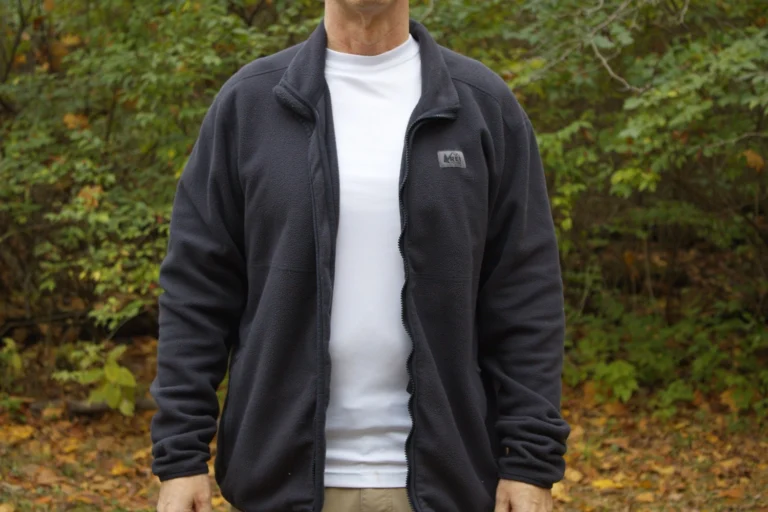
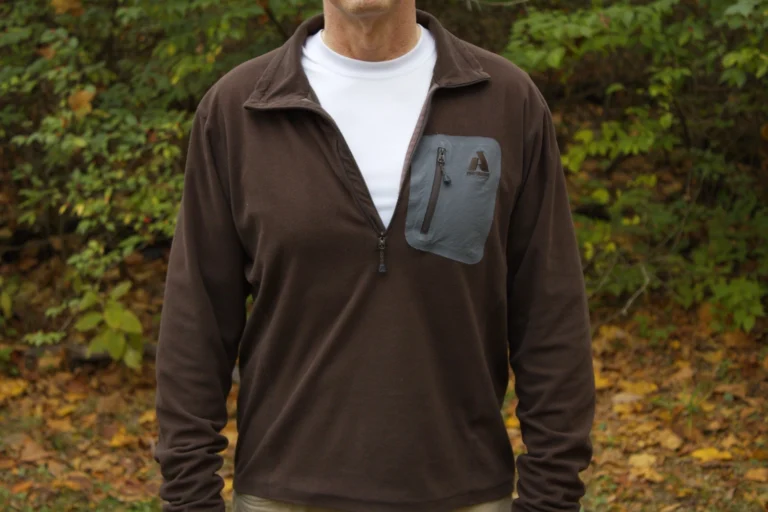
Fleece jackets typically have either full-zip or half-zip configurations. Full-zip configurations are better for hiking because they let you adjust your body temperature. If you buy a full-zip fleece jacket, make sure the brand is reputable so the zipper doesn’t blow out. YKK zippers are reliable.
Alternatives
If you already have a synthetic or wool sweater, you can save money by using it instead of buying a fleece jacket. However, a sweater will be heavy and bulky and may require a larger and heavier backpack, defeating the purpose of saving money. Besides, low-end synthetic fleeces are affordable. If you use a sweater, make sure it doesn’t contain cotton.
Fleece Pants
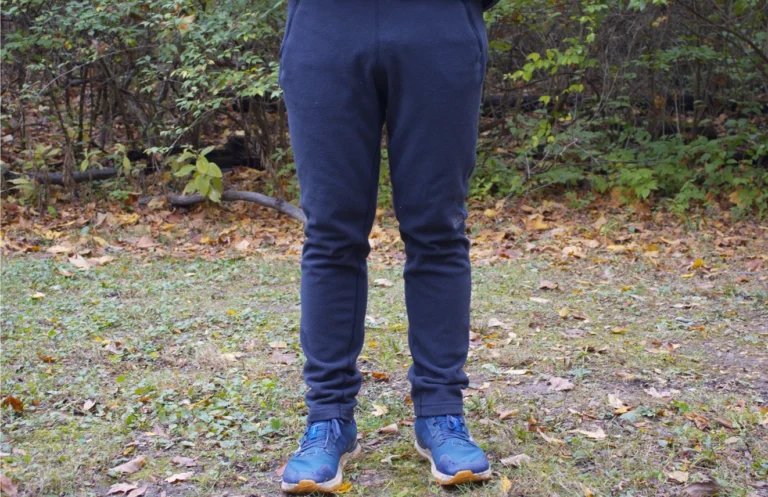
For hiking in extremely cold weather, fleece pants make excellent mid-layers, adding warmth between your base-layer bottoms and outer pants. Most budget, three-season backpackers are unlikely to encounter conditions cold enough to require them, and at milder temperatures, they can cause overheating and become soaked with sweat. However, even budget backpackers may find fleece pants worthwhile for day hikes in frigid conditions.
They’re great for sleeping in or sitting around camp in cold weather, though they add bulk to your backpack.