
Budget Footwear and Socks for Backpacking

Table of Contents
Affiliate Disclosure
Sweetspotbackpack.com is an affiliate marketing website providing recommendations and links to sellers, including Amazon, Backcountry, Steep&Cheap, and Decathlon. I receive commissions on most (but not all) items you buy through links in this website. I recommend some items without being paid if they’re the best deals and I’m not affiliated with the sellers.
sweetspotbackpack.com is a participant in the Amazon Services LLC Associates Program, an affiliate advertising program designed to provide a means for sites to earn commission fees by advertising and linking to the following web sites.
Product prices and availability are accurate as of the date/time indicated and are subject to change. Any price and availability information displayed on [relevant Amazon Site(s), as applicable] at the time of purchase will apply to the purchase of this product.
Sweet Spot Recommendations
For most budget backpackers, I recommend trail-running shoes. They’re lightweight, quick-drying, and have low stack heights that provide stability. However, they might not be ideal for your specific backpacking conditions. If you’ll be scrambling over scree and talus with a heavy pack, a sturdier pair of hiking boots may be the better choice. If you’ll be hiking in snowy or slushy subfreezing conditions, you’ll need insulated waterproof boots.
In my non-expert opinion, hiking shoes are less suitable than both trail-running shoes and hiking boots. Compared with trail-running shoes, hiking shoes tend to have a higher stack height, which can reduce stability and increase the risk of ankle rolls. At the same time, they generally don’t offer as much ankle support as high-cut hiking boots with stiff uppers and torsionally rigid midsoles.
For details about choosing footwear, see Beginner’s Guide to Footwear and Socks for Backpacking.
If possible, buy footwear at a bricks-and-mortar store so you can try it on first. If this isn’t possible, or if you already know what footwear is right for you, below are some mid-price options designed for rugged terrain.
Stack Height and Heel-to-Toe Drop
Stack Height is the maximum height of the midsole.
Heel-to-toe drop (aka drop), is the difference between the height of the cushion at the heel and the cushion at the forefoot.
Trail-running Shoes
Men's Trail-running Shoes
Drop: 4 mm
Stack height: 28 mm
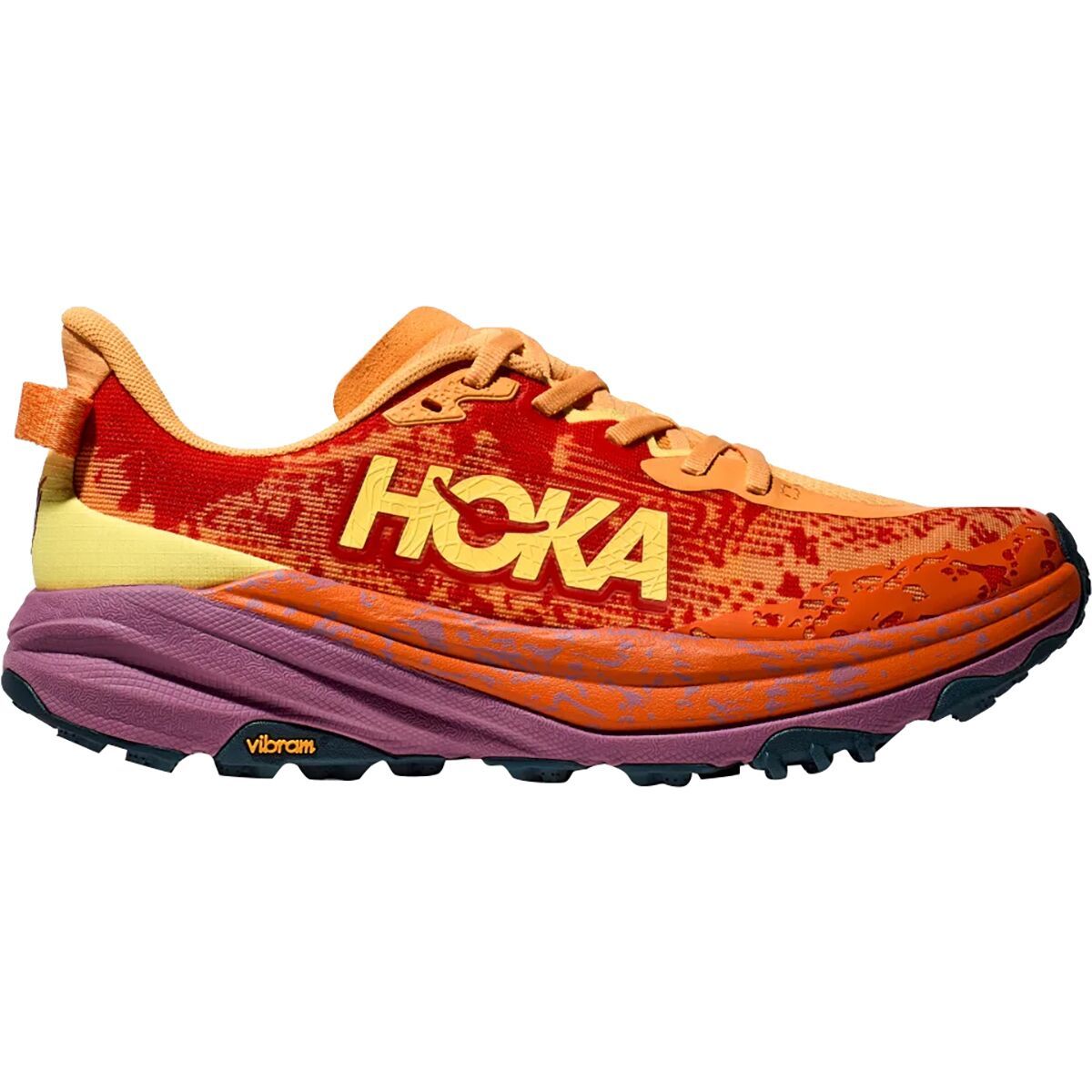
Drop: 0 mm
Stack height: 25 mm
Wide toe box
My Thoughts
This shoe isn’t for everyone—its zero drop, low stack height, and wide toe box are ideal for some feet and unsuitable for others.
As a pigeon-toed hiker, I used to roll and sprain my ankle frequently. I switched to Lone Peaks about 6 years ago and haven’t rolled an ankle since. I attribute this to the stabilization provided by the zero drop, low stack height, and wide toe box.
Women's Trail-running Shoes
Drop: 4 mm
Stack height: 28 mm
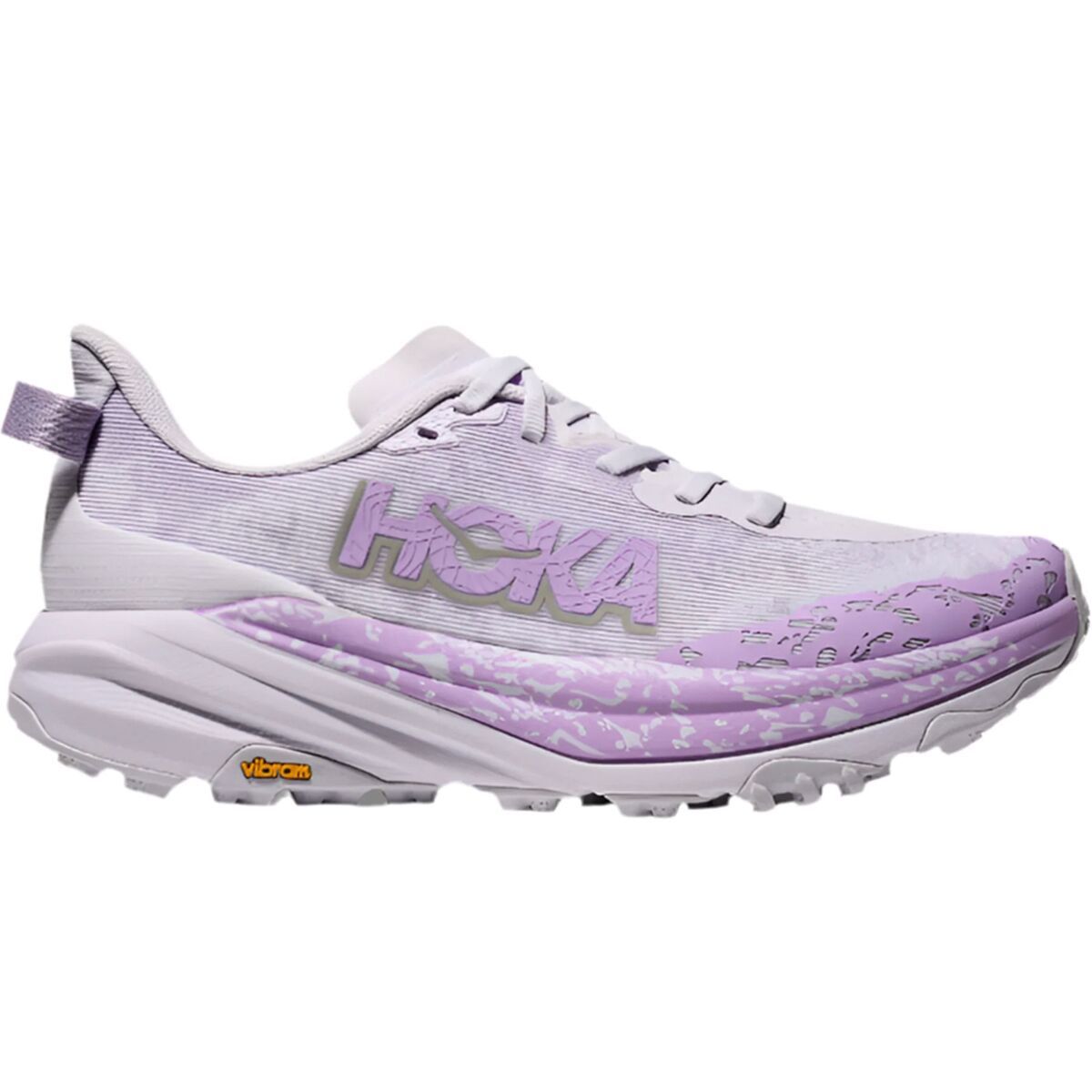
Drop: 0 mm
Stack height: 25 mm
Wide toe box
Hiking Shoes
Men's Hiking Shoes
Women's Hiking Shoes
Hiking & Backpacking Boots
Men's Hiking Boots
Women's Hiking Boots
Socks
Midweight Socks
Materials: 66% Merino Wool, 32% Nylon, 2% Lycra Spandex
38% Merino Wool, 30% Acrylic, 30% Polyamide, 2% Elastane
Heavyweight Winter Socks
74% Merino Wool, 8% Nylon, 17% Recycled Nylon, 1% Elastane
74% Merino Wool, 8% Nylon, 17% Recycled Nylon, 1% Elastane
Lightweight Warm-weather Socks
54% Nylon, 43% Merino Wool, 3% Lycra Spandex
54% Nylon, 43% Merino Wool, 3% Lycra Spandex